CorClim
Climate change on coralligenus habitat
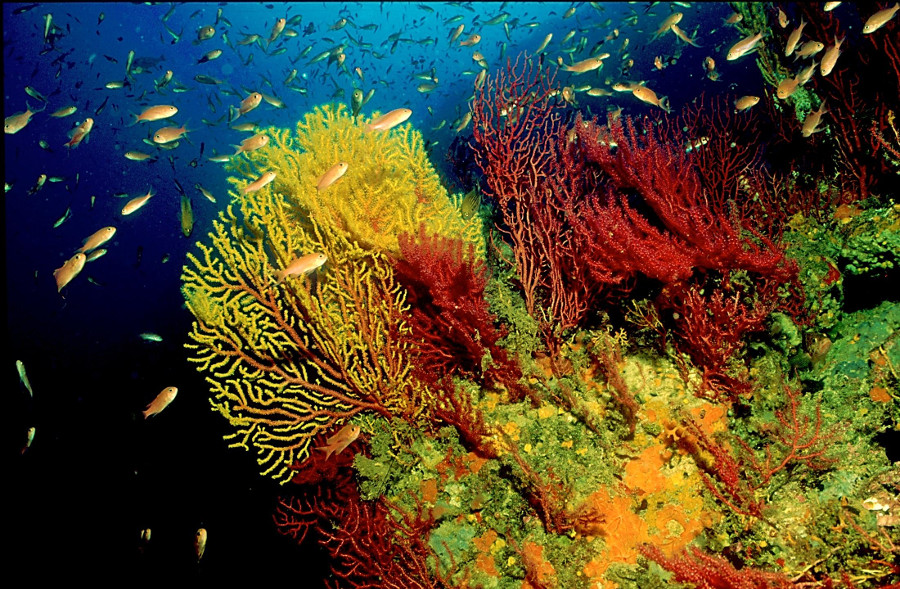
Coralligenous outcrops are among the highest diverse habitats harboring abundant slow-growing species. One of the major threats affecting coralligenous habitats is the occurrence climate-induced mortalities and the invasion by exotic species. In the Cabrera National Park, there is an exceptional coralligenous habitat unfortunately affected by these climate-induced disturbances. The main goal of CorClim project is to study the effects and consequences of climate change over coralligenous habitat as well as to evaluate the recover capacity of the main structural species of the community, the red gorgonian Paramuricea clavata.
The fact that a new mass mortality event detected in 2011 affected the gorgonian population previously studied by the research team will allow achieving unsolved questions, which are key not only for the conservation of the coralligenous in the Cabrera National Park but for the conservation of this exceptional Mediterranean habitat at a broad spatial scale.
Objectives
The main goal of the project is to study the effects and consequences of termal anomalies over coralligenous outcrops as well as to evaluate the recover capacity of the main structural species of the community, the red gorgonian Paramuricea clavata. The specific objectives are:
- Monitoring of the environmental context.
- To evaluate the direct impact of thermal anomalies over all the coralligenous community.
- To evaluate the indirect impact of thermal anomalies through the loss of the structural species P. clavata.
- To determine experimentally the thermal tolerance of the main species inhabiting the coralligenous.
- To study the evolution of the gorgonian population after the 2011 mass mortality event.
- To evaluate the recover capacity of the structural species P. clavata through the genetic connectivity between the shallow and affected and the deep and non-affected gorgonians.
Study Site
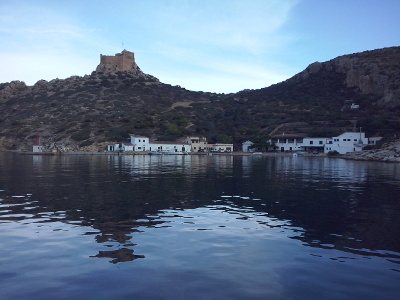
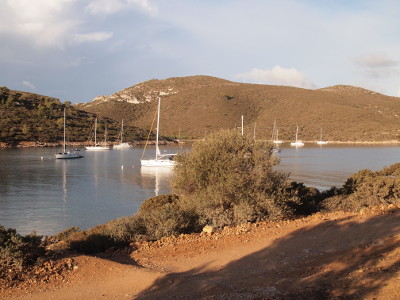
The Cabrera National Park that includes the whole of the Cabrera Archipelago in the Balearic Islands, Spain. The archipelago has great natural value. Due to its isolation throughout history, it has remained relatively unchanged. The coastal landscape of Cabrera is often considered one of the best preserved on the Spanish coast, and indeed in all of the Mediterranean, as a result. Due to its biotic wealth and abundance and variety of birds, the park has also been declared a Special Protection Area (SPA) for birds. It is also a Site of Community Importance (SIC), and as such is integrated into the Natura 2000 network. The park is likewise among the ranks of the Specially Protected Areas of Mediterranean Importance (SPAMI) under the protocols for protected marine areas established by the Barcelona Convention.
This study has been performed in the Archipelago of Cabrera National Park (Balearic Islands, Western Mediterranean), in a coralligenous wall dominated by the red gorgonian Paramuricea clavata, situated in the South-East wall of the Imperial islet (39º 07’34’’N; 2º57’29’’E), between 40 and 45 m depth.
The study area is characterized by remaining largely unaffected by anthropogenic impacts, due to its distance to any continental influence and the effect of protection.
However, this area has suffered the effects of two positive thermal anomalies in 2007 and 2011.